
Why Are My Toenails Turning Yellow? A Podiatrist's Complete Guide

If you have noticed your toenails taking on a yellow, thickened, or discoloured appearance, you are not alone. Yellow toenails are one of the most common concerns that bring patients to see a podiatrist for nail problems. While the cause is often a fungal infection, there are several other reasons your nails may be changing colour — and understanding the difference matters.
At DG Podiatrist in Harare, we see nail-related concerns regularly. This guide walks you through the most common causes of yellow toenails, what to look out for, and how we can help you get your nails back to a healthy state.
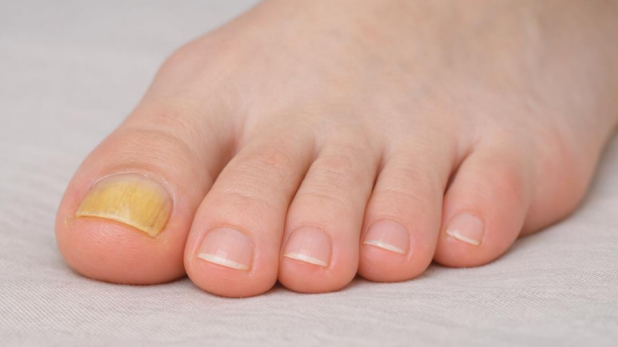
What Does It Mean When Toenails Turn Yellow?
A healthy toenail should be pale pink with a white tip. When nails start turning yellow, brown, white, or developing a greenish tinge, it is a signal that something has changed — either in the nail itself or in the surrounding tissue.
Yellow toenails are not simply a cosmetic issue. In many cases, they indicate a treatable condition that, if left unaddressed, can worsen and affect other nails or cause pain.
Common Causes of Yellow Toenails
1. Fungal Nail Infection (Onychomycosis)
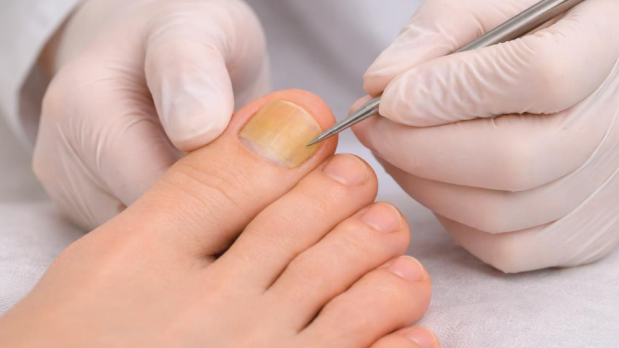
This is the most common cause of yellow toenails. A fungal infection causes the nail to become discoloured, thickened, brittle, and sometimes malodorous. The infection typically starts at the tip of the nail and gradually spreads toward the root. It can affect one nail or multiple nails simultaneously.
Fungal infections thrive in warm, moist environments — which is why feet are particularly vulnerable. Public pools, shared showers, and wearing occlusive footwear for extended periods all increase risk.
A podiatrist for nail problems can diagnose a fungal infection visually or through a nail sample and recommend the appropriate antifungal treatment.
2. Nail Polish and Chemical Residue
Wearing nail polish for extended periods can stain the nail plate yellow. This is a cosmetic issue rather than a health concern, though it can look similar to a fungal infection. If the discolouration fades after leaving nails polish-free for a few weeks, nail polish is likely the culprit.
Always use a clear base coat under dark polish to create a barrier between the pigment and the nail.
3. Trauma to the Nail
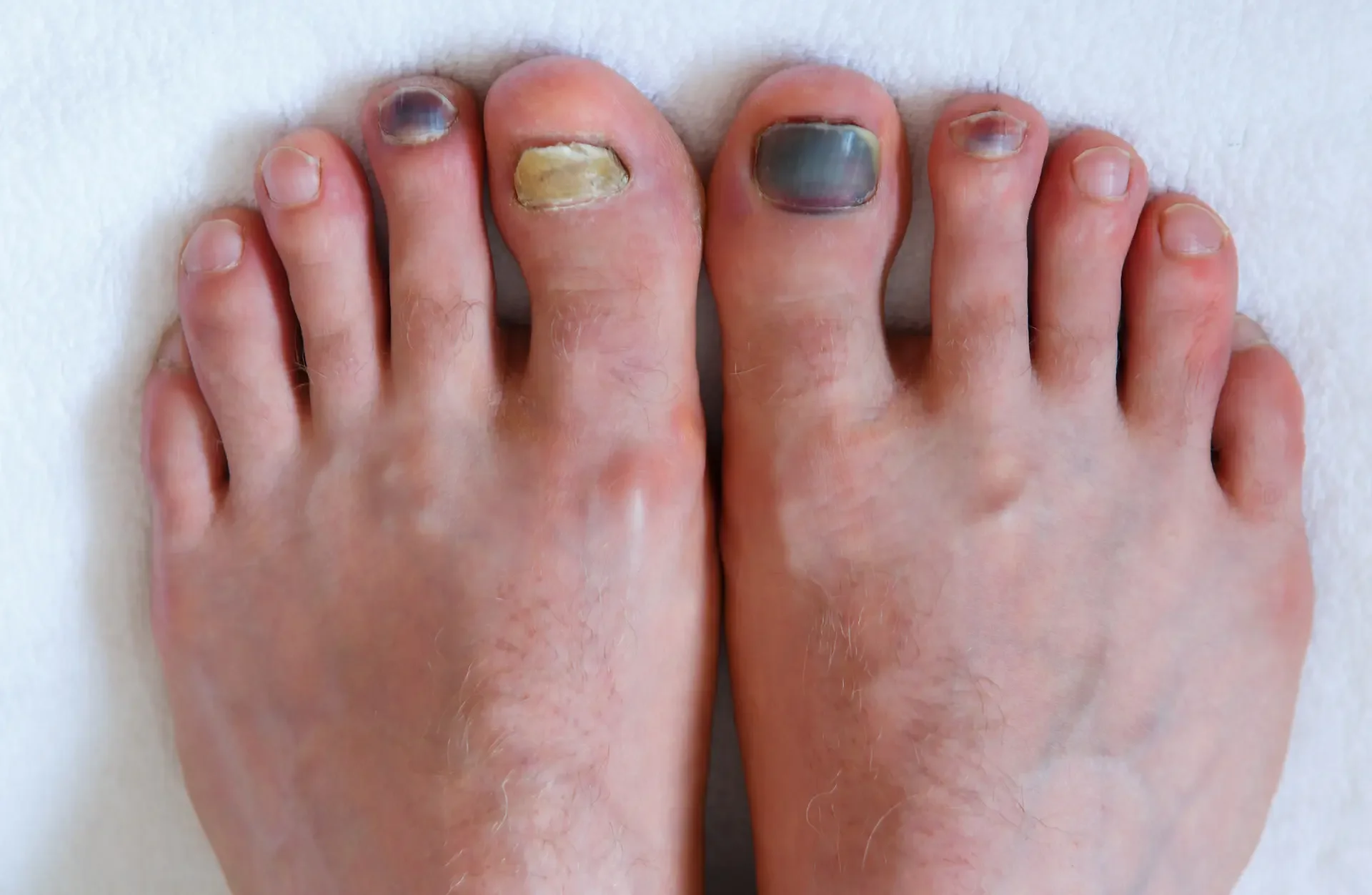
Repetitive pressure on the toenails — from ill-fitting shoes, running, or sports activities — can cause trauma that leads to discolouration. A bruised nail may appear dark red, purple, or brown initially before fading to yellow as the blood underneath the nail breaks down. This type of discolouration usually resolves on its own as the nail grows out.
4. Yellow Nail Syndrome
This is a rare but recognised medical condition characterised by slow-growing, thick, yellow nails accompanied by other symptoms such as lymphoedema (swelling in the limbs) or respiratory problems. If you have yellow nails alongside any systemic symptoms, it is important to seek medical evaluation.
5. Psoriasis Affecting the Nails
Psoriasis does not only affect the skin — it can also change the appearance of nails. Nail psoriasis can cause pitting, thickening, separation from the nail bed, and discolouration including yellow or brown patches. If you have a history of psoriasis, this is worth discussing with your podiatrist for nail problems.
6. Diabetes and Poor Circulation
People with poorly controlled diabetes may develop nail changes due to compromised circulation and immune function. Yellowing, thickening, and increased susceptibility to fungal infections are all common. This is one reason why regular nail assessment is an important part of diabetic foot care.
7. Ageing
As we age, our toenails naturally grow more slowly and can become thicker and more discoloured. This is a normal physiological change, though ageing nails are also more prone to fungal infections. Regular nail care from a podiatrist for nail problems can keep age-related nail changes manageable.
When Should You See a Podiatrist for Nail Problems?
You should schedule an appointment at DG Podiatrist in Harare if:
Your toenails are thickening and becoming difficult to cut
The discolouration is spreading to other nails
You notice crumbling or a bad smell from under the nail
There is pain around or under the affected nail
The nail is separating from the nail bed
Home treatments have not improved the situation after several weeks
You have diabetes and notice any change in your nails
How DG Podiatrist Treats Yellow Toenails in Harare
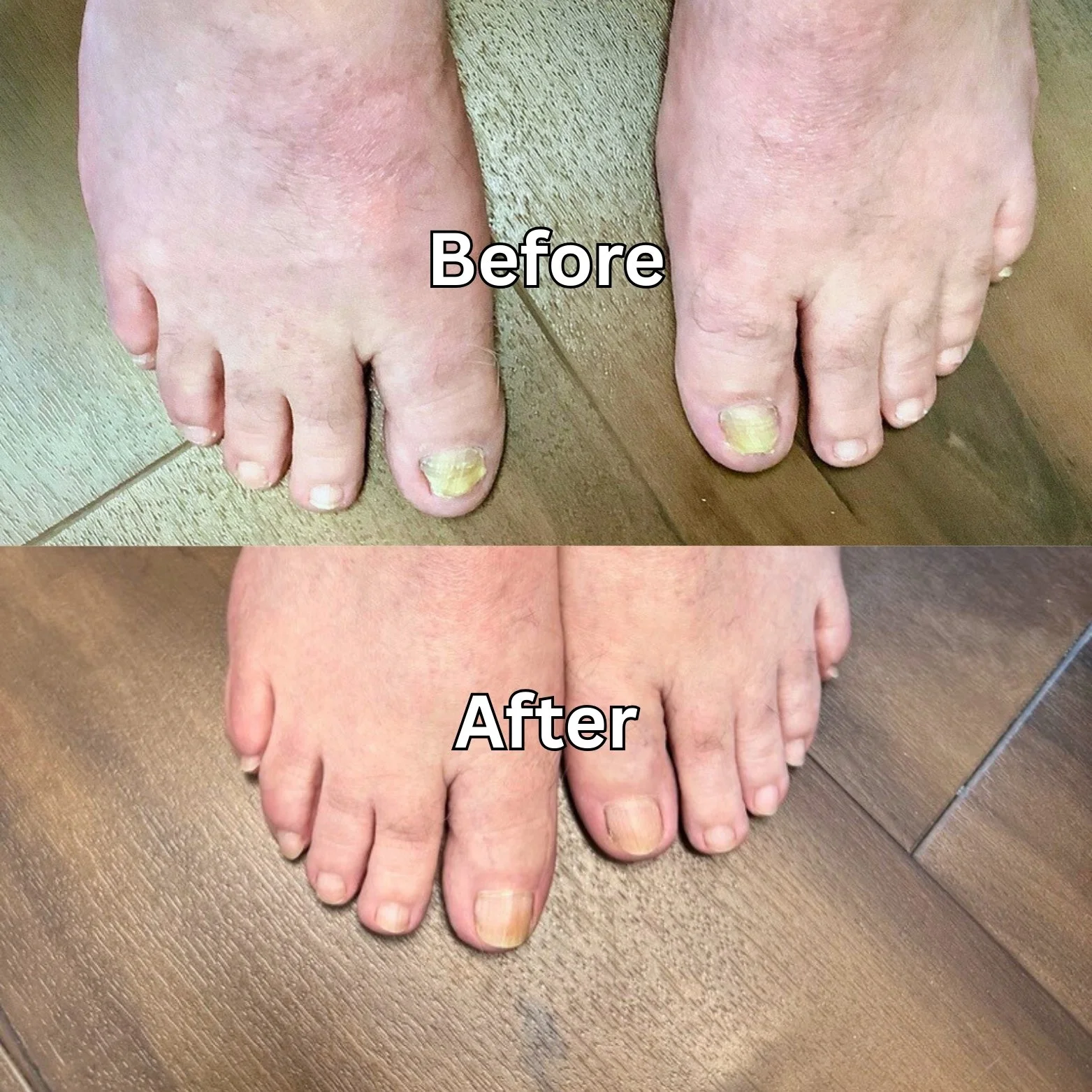
Treatment depends on the underlying cause. Your DG Podiatrist consultation will begin with a thorough assessment of the nail and your overall foot health. Common treatment approaches include:
Topical or oral antifungal medication for fungal infections
Professional nail debridement (thinning and shaping of thickened nails)
Advice on footwear and hygiene to prevent recurrence
Referral for further investigation if a systemic cause is suspected
Our team of podiatrists for nail problems in Harare is skilled in accurate diagnosis and effective, evidence-based treatment. We take a thorough approach so that we are addressing the root cause — not just the visible symptoms.
Preventing Yellow Toenails
Many causes of yellow toenails are preventable with the right habits:
Keep feet clean and dry, especially between the toes
Wear breathable, well-fitting shoes
Change socks daily and avoid wearing the same pair of shoes two days in a row
Wear protective footwear in communal wet areas
Keep toenails trimmed straight across
Use a base coat under nail polish and give nails regular polish-free breaks
Have regular podiatry check-ups, especially if you have diabetes
Frequently Asked Questions (FAQs)
Q1: How do I know if my yellow toenail is fungal or just stained from nail polish?
Nail polish staining tends to affect the surface uniformly and will fade when nails are left without polish for a few weeks. Fungal infections typically cause thickening, brittleness, and sometimes an unpleasant smell — and the discolouration worsens over time. A podiatrist for nail problems can confirm the cause with a clinical assessment or nail sample.
Q2: Can yellow toenails go away on their own without treatment?
If the cause is temporary staining or minor trauma, discolouration can resolve as the nail grows out. However, fungal infections rarely clear without treatment and tend to worsen. It is better to seek an assessment earlier rather than waiting, as early treatment is more effective.
Q3: How long does it take to treat a fungal nail infection?
Fungal nail treatment takes time because toenails grow slowly. Topical treatments may need to be used consistently for six to twelve months. Oral antifungal medication can work faster but is not suitable for everyone. Your podiatrist for nail problems will advise on the best approach for your situation.
Q4: Is a fungal nail infection contagious?
Yes, fungal infections can spread from nail to nail, from foot to foot, and from person to person — particularly through shared towels, socks, shoes, or contact in communal wet areas. This is why treatment and prevention of recurrence are equally important.
Q5: Can I paint over a yellow toenail to hide it?
Covering a fungal nail with polish is not recommended. Nail polish creates an occlusive environment that traps moisture and can actually make the infection worse. It is better to treat the underlying cause before applying any cosmetic products.
Q6: Do I need a referral to see a podiatrist for nail problems at DGPodiatrist?
No, you can contact DG Podiatrist directly to book an appointment. We welcome self-referrals from patients across Harare who are concerned about their nail health.
Q7: Can children get yellow or fungal toenails?
Yes, children can develop fungal nail infections, though it is less common than in adults. If you notice nail changes in your child, it is worth having them assessed by a podiatrist for nail problems rather than attempting home treatment.
Q8: Are some people more at risk for yellow toenails than others?
Yes. Risk is higher in people who are older, who have diabetes or circulatory issues, who use communal swimming pools or gyms, who sweat heavily, or who wear tight, non-breathable footwear regularly.
Q9: Can I treat a fungal nail infection with over-the-counter products?
Mild cases may respond to over-the-counter antifungal nail treatments, but these require consistent, long-term application and are often less effective for more established infections. A podiatrist for nail problems can advise whether a stronger prescription treatment is needed.
Q10: What makes DG Podiatrist the right choice for nail problems in Harare?
At DGPodiatrist, we combine clinical expertise with a patient-centred approach. We take the time to properly diagnose nail conditions before recommending treatment, and we provide guidance on preventing recurrence. Our team is experienced in managing a wide range of nail conditions for patients across Harare.
Ready to put your best foot foward?
Visit our bookings page or simply click below to book an appointment with DG Podiatrist today. Alternatively email us at bookings@dgpodiatrist.com.