
Sports Injury Treatment in London: How a Podiatrist Gets Athletes Back on Their Feet
FLondon has no shortage of ways to stay active, from running clubs and five-a-side football to boutique gyms and studio classes. But with all that activity comes a steady stream of foot and ankle injuries, and knowing where to go for proper treatment can make the difference between a quick recovery and a problem that keeps coming back.
This guide covers the most common sports injuries affecting the feet and ankles, why seeing a podiatrist matters, and how sports injury treatment works in practice.
1. Common Sports Injuries Affecting the Feet & Ankles
Some injuries show up again and again among people who train regularly, whatever their sport:
Plantar fasciitis – pain along the heel or arch, often worse first thing in the morning or after periods of rest, common among runners
Achilles tendinopathy – stiffness or pain at the back of the heel, usually developing gradually rather than from a single incident
Ankle sprains – rolling or twisting the ankle during sport, one of the most frequent injuries across almost every activity
Stress fractures – small overuse fractures that build up gradually, often starting as mild, easy-to-dismiss discomfort
Shin splints – pain along the shin that's frequently linked back to how the foot is moving and absorbing impact, not just the shin itself
2. Why See a Podiatrist (Not Just Rest It)
Resting an injury is important, but rest alone doesn't always address what caused it in the first place. If an injury is linked to how your foot moves, the way it strikes the ground, or the footwear you're using, simply waiting for the pain to settle often means it comes back once you return to training.
A podiatrist and a physiotherapist work well together rather than in competition. Broadly speaking, a podiatrist focuses on foot mechanics, gait, and footwear, while a physiotherapist tends to focus on muscle strength, flexibility, and movement rehabilitation. Many athletes benefit from both, depending on the injury.
3. How Sports Injury Treatment Works at DG Podiatrist
Treatment starts with a thorough assessment, looking at your gait, injury history, training patterns, and current footwear to understand what's actually driving the problem. From there, treatment might include strapping or taping to support the area, custom orthotics if a biomechanical issue is contributing to the injury, and practical footwear recommendations suited to your sport and foot type.
The goal isn't just short-term symptom relief. It's helping you get back to your sport safely, with a lower chance of the same injury resurfacing a few weeks later.
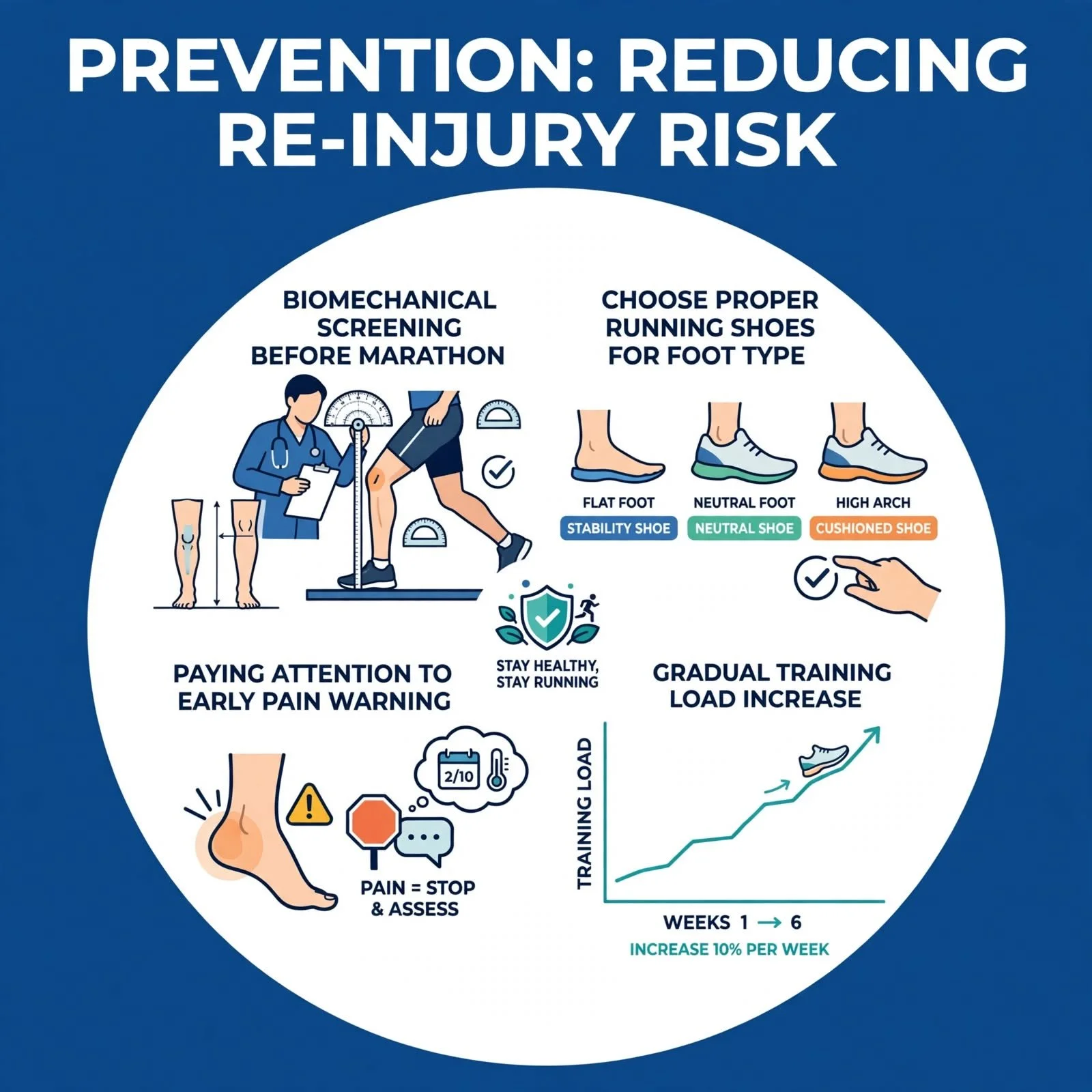
4. Prevention: Reducing Re-Injury Risk
A good sports podiatry visit isn't only about treating an existing injury, it's also about preventing the next one. A few things make a real difference:
Choosing footwear suited to your specific sport and foot type, rather than whatever's on sale
Increasing training load gradually rather than ramping up too quickly, especially ahead of races or events
Booking a biomechanical screening before a big event, such as marathon season, to catch potential issues early
Paying attention to early, low-level pain instead of pushing through it and hoping it settles on its own
5. Who This Is For
Sports podiatry isn't just for elite athletes. It's just as relevant for regular runners, weekend footballers, gym-goers, dancers, or anyone with an active lifestyle who's noticed recurring foot or ankle discomfort that never quite goes away, even with rest.
6. Why Choose DG Podiatrist in Mayfair, London
Based in the heart of Mayfair, DG Podiatrist offers a convenient central London location for anyone training or competing across the city. Treatment is led by UK-qualified podiatrist Dina Gohil, whose client base includes professionals from London's 5-star hospitality sector and the wider Harrods team, reflecting a level of trust built over more than a decade in practice.
7. Final Thoughts
Foot and ankle injuries are one of the most common setbacks for anyone active, but they're also one of the most preventable with the right support. Whether you're dealing with a current injury or want to reduce your risk before your next event, a proper podiatric assessment is a smart place to start.
Book your sports injury assessment with DG Podiatrist in Mayfair, London today.
Frequently Asked Questions (FAQs)
Q1. Can a podiatrist treat a sprained ankle?
Yes, podiatrists regularly assess and treat ankle sprains, including strapping, support, and advice on safely returning to activity.
Q2. How soon after an injury should I see a podiatrist?
It's generally best to have a niggling or new injury assessed as soon as possible, rather than waiting to see if it resolves on its own, especially if pain persists or affects how you're walking.
Q3. Do I need a referral for sports podiatry?
No, you can usually book a sports injury assessment directly without needing a referral.
Q4. What's the difference between a podiatrist and a physiotherapist for sports injuries?
A podiatrist tends to focus on foot mechanics, gait, and footwear, while a physiotherapist typically focuses on muscle strength and movement rehabilitation. The two often complement each other well.
5. Can custom orthotics prevent running injuries?
For runners with a biomechanical issue contributing to their injuries, custom orthotics can help by improving how load is distributed through the foot. A podiatrist can assess whether this applies to you.
Q6. What causes plantar fasciitis in runners?
It's often linked to a combination of factors, including footwear, training load, and how the foot moves, which is why a full assessment helps identify the specific cause in your case.
Q7. How long does it take to recover from a sports-related foot injury?
Recovery time varies significantly depending on the injury and the individual, so it's best discussed directly with your podiatrist after an assessment.
Q8. Should I stop training completely if I have a foot injury?
Not always, but this depends on the injury. Your podiatrist can advise on which activities are safe to continue and which to modify or pause.
Q9. Can the wrong shoes cause sports injuries?
Yes, footwear that doesn't suit your foot type or sport can contribute to a range of injuries, which is why footwear advice is often part of sports injury treatment.
Q10. Do podiatrists treat professional and amateur athletes differently?
The assessment approach is the same, thorough and personalised, though treatment plans are always tailored to each individual's activity level and goals, whether they're a weekend runner or a competitive athlete.
Ready to put your best foot foward?
Visit our bookings page or simply click below to book an appointment with DG Podiatrist today. Alternatively email us at bookings@dgpodiatrist.com.