
Foot Doctor vs Podiatrist: What’s the Difference and Who Should You See?

If you’ve ever typed “foot doctor near me” into Google, you may have come across the term “podiatrist” and wondered — are these the same thing? It’s a common question, and the honest answer is: it depends on where you are in the world.
Here in the UK — and particularly in London — understanding the difference between a foot doctor and a podiatrist can save you time and make sure you get the right care. Let’s break it all down in plain English.

What Is a Foot Doctor?
The term “foot doctor” is a general, informal label. It’s not a regulated title — which means technically anyone could call themselves a foot doctor. In everyday conversation, people use it to refer to any healthcare professional who treats feet, which can include podiatrists, orthopaedic surgeons, and sometimes even physiotherapists who work with lower limb conditions.
Think of “foot doctor” as the umbrella term, and “podiatrist” as the specific, qualified professional underneath it.
What Is a Podiatrist?
A podiatrist is a regulated healthcare professional who specialises in diagnosing, treating, and preventing conditions affecting the feet, ankles, and lower limbs. In the UK, podiatrists must be registered with the Health and Care Professions Council (HCPC) — this means their training, qualifications, and practice are held to strict professional standards.
Podiatrists can handle a wide range of issues, including:
• Ingrown toenails
• Fungal nail infections
• Heel pain and plantar fasciitis
• Corns and calluses
• Diabetic foot care
• Flat feet and gait problems
• Sports-related foot injuries
At DG Podiatrist in London, our podiatrists are fully HCPC-registered and bring years of clinical experience to every appointment.
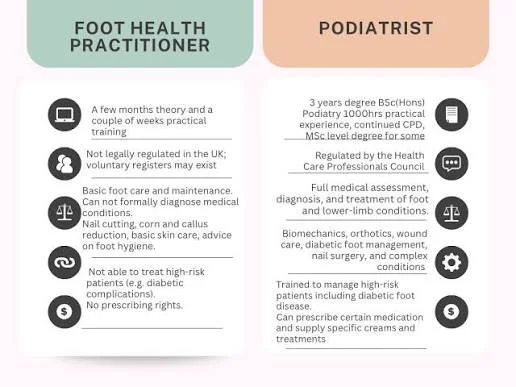
Foot Doctor vs Podiatrist: The Key Differences
Here’s a simple way to look at it:
Foot Doctor — A broad, informal term. Could refer to various specialists who treat foot conditions. Not a protected title in the UK.
Podiatrist — A specific, regulated profession. HCPC-registered. Trained to assess, diagnose, and treat foot and lower limb conditions.
In the UK, when you search for a “foot doctor,” you’re most likely looking for a podiatrist. That’s the qualified professional you want to see for foot health concerns.

When Should You See a Podiatrist?
You don’t need a GP referral to see a podiatrist in many cases. Book an appointment if you’re experiencing:
Persistent heel, arch, or sole pain
Thickened, discoloured, or painful toenails
Hard skin, corns, or calluses that keep returning
Foot pain that’s affecting your daily life or exercise routine
Concerns related to diabetes and foot health
A child with flat feet or unusual walking patterns
Early intervention from a podiatrist can prevent minor issues from becoming serious, long-term problems.

Do You Ever Need an Actual Surgeon?
In some complex cases — such as severe bunions, structural deformities, or injuries requiring surgical correction — a podiatric surgeon or orthopaedic surgeon may be recommended. However, a podiatrist will usually be your first port of call and can refer you onwards if needed.
Why Choose DG Podiatrist in London?
At DG Podiatrist, we combine clinical expertise with a patient-first approach. Whether you’re dealing with something routine like a verruca or a more complex condition like a sports injury, our team in London provides personalised, evidence-based care.
We believe in clear communication — no jargon, no unnecessary procedures, just honest advice and effective treatment.

Conclusion
Osteoarthritis, rheumatoid arthritis, and gout can all affect the joints of the foot, causing chronic stiffness, swelling, and pain. The big toe joint is a particularly common site for arthritis, as is the ankle joint. Pain from foot arthritis tends to be worse after periods of inactivity and at the end of the day.
DG Podiatrist works collaboratively with patients who have arthritis to manage their foot symptoms through orthotic support, appropriate footwear, and activity recommendations that keep them moving without exacerbating joint pain.
Frequently Asked Questions (FAQs)
1. Is a foot doctor the same as a podiatrist in the UK?
Not exactly. “Foot doctor” is a general term used informally, while “podiatrist” is a regulated professional title in the UK. All podiatrists are foot specialists, but not all people calling themselves “foot doctors” are registered podiatrists.
2. Do I need a GP referral to see a podiatrist?
In most cases, no. You can book directly with a private podiatrist like DG Podiatrist in London without a referral. For NHS podiatry services, a GP referral may be required depending on your area.
3. What qualifications should a podiatrist have in the UK?
UK podiatrists must hold a recognised degree in Podiatry and be registered with the Health and Care Professions Council (HCPC). Always check that your podiatrist carries HCPC registration.
4. Can a podiatrist treat children’s foot problems?
Yes. Podiatrists are trained to assess and treat foot conditions in people of all ages, including children. Common paediatric concerns include flat feet, in-toeing, and growing pains related to the feet and legs.
5. What conditions does a podiatrist not treat?
A podiatrist focuses on the foot, ankle, and lower limb. For conditions involving the knee, hip, or spine, you’d typically see a physiotherapist, orthopaedic specialist, or rheumatologist. Your podiatrist can advise and refer if needed.
6. Is a podiatrist or a chiropodist the same thing?
Yes — in the UK, the terms “podiatrist” and “chiropodist” refer to the same profession. “Podiatrist” is now the preferred and more widely used title.
7. How often should I see a podiatrist?
This depends on your needs. There is a mix of people that like monthly pedicures and clean up to others with diabetes or ongoing foot conditions may need regular appointments every 6–12 weeks. For general foot maintenance, an annual check-up is a good starting point.
8. Can a podiatrist prescribe orthotics?
Yes. Podiatrists can assess your gait and foot structure and prescribe custom or off-the-shelf orthotics (insoles) to correct biomechanical issues, relieve pain, and improve function.
9. What is the difference between a podiatrist and a podiatric surgeon?
A podiatrist provides non-surgical assessment and treatment. A podiatric surgeon has additional surgical training and can perform procedures such as bunion corrections or tendon repairs. Your podiatrist will refer you to a surgeon if surgery is the appropriate course of action.
10. Does DG Podiatrist in London offer same-day or urgent appointments?
We aim to accommodate urgent cases as quickly as possible. Please contact our clinic directly to enquire about appointment availability for urgent concerns.
Ready to put your best foot foward?
Visit our bookings page or simply click below to book an appointment with DG Podiatrist today. Alternatively email us at bookings@dgpodiatrist.com.