
Flat Feet Doctor: When Flat Feet Need Treatment (and When They Don't)
Flat feet are far more common than most people realise, and for a lot of people, they cause no trouble at all. But for others, flat feet are behind ongoing arch pain, tired legs, or even knee and back discomfort that seems to have no obvious cause. So how do you know which category you fall into, and when is it actually worth seeing a flat feet doctor?
This guide covers what flat feet are, the symptoms that suggest it's time for an assessment, and the treatment options a podiatrist can offer if your flat feet are genuinely causing problems.
1. What Are Flat Feet?
Flat feet, sometimes called fallen arches, describes a foot with little or no visible arch when standing. There are two main types. Flexible flat feet show an arch when the foot is lifted off the ground but flatten out under weight, while rigid flat feet show little to no arch in either position.
There are several reasons flat feet develop. Genetics play a big role for many people, while others notice changes over time due to ligament laxity, general wear on the tendons that support the arch as we age, a previous injury, or shifts in weight distribution, such as during pregnancy.
2. Symptoms That Mean You Should See a Flat Feet Doctor
Flat feet on their own aren't necessarily a problem. What matters is whether they're causing symptoms. It's worth booking an assessment if you notice:
Arch or heel pain, especially after standing or walking for a while
Swelling along the inside of the ankle
Feet or legs that tire more quickly than they used to
Uneven wear patterns on the inside of your shoes
Pain that seems to radiate up into your knees, hips, or lower back
Difficulty standing on your toes or a feeling of instability while walking
Because the feet form the foundation for how the rest of your body moves, a structural issue like flat feet can sometimes set off a chain reaction, affecting alignment further up the leg. This is exactly why a proper assessment matters if you're experiencing any of the above rather than treating each ache separately.
3. How a Podiatrist Diagnoses Flat Feet
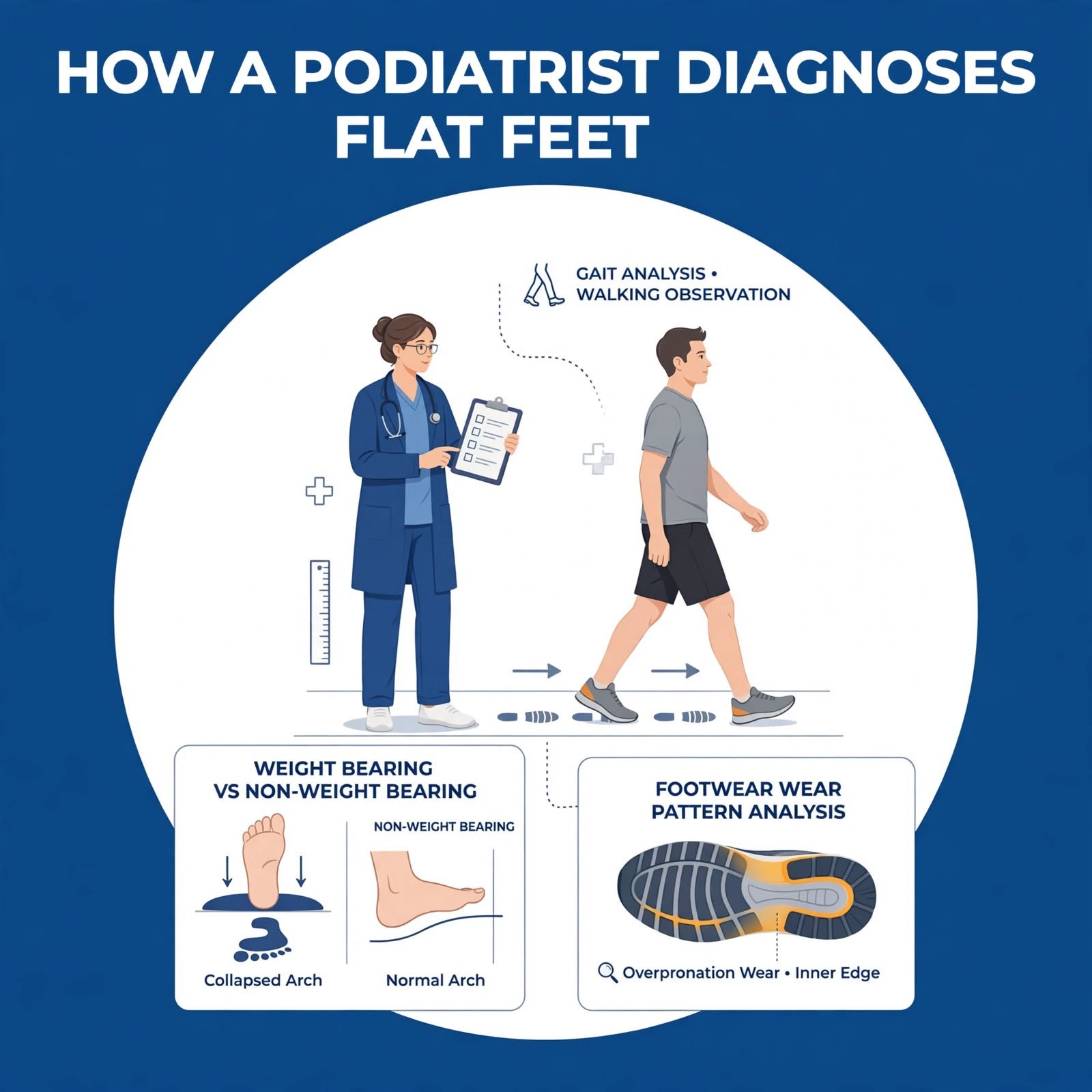
Diagnosing flat feet properly involves more than just looking at your feet while you stand still. A podiatrist will usually carry out a biomechanical assessment, which involves watching how your arch behaves both when it's bearing weight and when it isn't, examining your gait as you walk, and checking the wear patterns on your footwear.
In some cases, they'll also assess the strength and flexibility of the muscles and tendons supporting your arch, to build a full picture of what's contributing to your symptoms, rather than just treating the arch shape in isolation.
4. Treatment Options for Flat Feet
If your flat feet are causing genuine discomfort, there are several non-invasive approaches a podiatrist may recommend:
Custom orthotics, designed specifically for your feet to support the arch and redistribute pressure more evenly
Footwear advice, including guidance on the type of support and structure that will work best for your foot shape
Targeted stretches and strengthening exercises for the arch, calf, and surrounding muscles
Activity modification, particularly if certain movements or exercises are aggravating symptoms
In rare, persistent cases where structural issues don't respond to these approaches, further options may be discussed, though this is uncommon and would only follow a thorough assessment and, where appropriate, referral.
5. Flat Feet in Children vs Adults
Flat feet look a little different depending on age. Many children have flexible flat feet as their arches are still developing, and this often resolves naturally as they grow, so treatment isn't always needed unless there's clear pain or a mobility issue.
In adults, flat feet can develop later in life, often due to gradual tendon wear, and this is sometimes referred to as adult-acquired flatfoot. If you've noticed your feet changing shape or new discomfort as an adult, it's worth having this properly checked rather than assuming it's just part of getting older.
6. Why Choose DG Podiatrist for Flat Feet Treatment
Biomechanics and orthotics are a core part of the care offered at DG Podiatrist, led by UK-qualified podiatrist Dina Gohil. Every assessment is evidence-based and genuinely personalised, meaning your treatment plan is built around how your specific feet move, not a generic template. This same standard of care is available at both the Mayfair, London clinic and the Harare, Zimbabwe clinic.
7. Final Thoughts
Flat feet aren't automatically something to worry about, but ongoing pain, fatigue, or discomfort elsewhere in your body shouldn't be brushed off either. A proper assessment can tell you exactly what's going on and whether treatment, such as custom orthotics, would genuinely help.
Book a biomechanical assessment with DG Podiatrist in Mayfair, London, or Harare, Zimbabwe today.
Frequently Asked Questions (FAQs)
Q1. Are flat feet a genetic condition?
Genetics is one of the most common reasons people have flat feet, though they can also develop later in life due to other factors like tendon wear or injury.
Q2. Do orthotics actually help flat feet?
For many people, custom orthotics help by supporting the arch and redistributing pressure more evenly, which can reduce pain and fatigue. Your podiatrist can advise whether they're the right option for you.
Q3. Can flat feet cause knee or back pain?
Yes, because the feet affect alignment throughout the leg, flat feet can sometimes contribute to discomfort in the knees, hips, or lower back.
Q4. Do children with flat feet need treatment?
Not always. Many children have flexible flat feet that naturally develop an arch as they grow. Treatment is usually only needed if there's pain or a clear impact on mobility.
Q5. Can flat feet develop in adulthood?
Yes, this is sometimes called adult-acquired flatfoot and can happen gradually due to tendon wear, injury, or other changes over time.
Q6. What's the difference between flexible and rigid flat feet?
Flexible flat feet show an arch when the foot is lifted but flatten under weight, while rigid flat feet show little to no arch in either position.
Q7. Are certain shoes better for flat feet?
Yes, shoes with proper arch support and structure tend to work better for flat feet than very flat or unsupportive footwear. A podiatrist can recommend what suits your specific foot shape.
Q8. Can exercises fix flat feet?
Targeted stretches and strengthening exercises can help support the arch and ease related discomfort, though they won't change the underlying structure of the foot.
Q9. Is surgery ever needed for flat feet?
It's uncommon and only considered in persistent cases that haven't responded to other treatments, following a thorough assessment.
Q10. How long does it take to notice improvement with orthotics?
This varies from person to person, and your podiatrist can give you a clearer idea based on your specific assessment and treatment plan.
Ready to put your best foot foward?
Visit our bookings page or simply click below to book an appointment with DG Podiatrist today. Alternatively email us at bookings@dgpodiatrist.com.