
Diabetic Foot Problems: Early Warning Signs You Should Never Ignore
IDiabetes affects nearly every part of the body, and the feet are often one of the quietest areas to show it. Problems can develop gradually, without much pain or warning, until something becomes hard to ignore. Understanding how diabetes affects your feet, and knowing what to watch for, is one of the most valuable things you can do to protect your mobility and comfort long term.
This guide walks through why diabetic foot problems happen, the warning signs worth taking seriously, and how ongoing podiatric care fits into managing diabetes well.
1. Why Diabetes Affects Your Feet
Diabetes can affect the feet in two main ways. The first is nerve damage, known as peripheral neuropathy, which can reduce sensation in the feet over time. This means small cuts, blisters, or areas of pressure might not feel painful the way they normally would, so they can go unnoticed.
The second is reduced circulation. When blood flow to the feet is affected, healing slows down considerably, which means even minor injuries can take much longer to recover, and are more vulnerable to infection in the meantime.
Put together, these two changes explain why foot care is such an important part of managing diabetes well. A small issue that would barely register for most people can quietly develop into something far more serious if it isn't noticed and treated early.
2. Common Diabetic Foot Problems
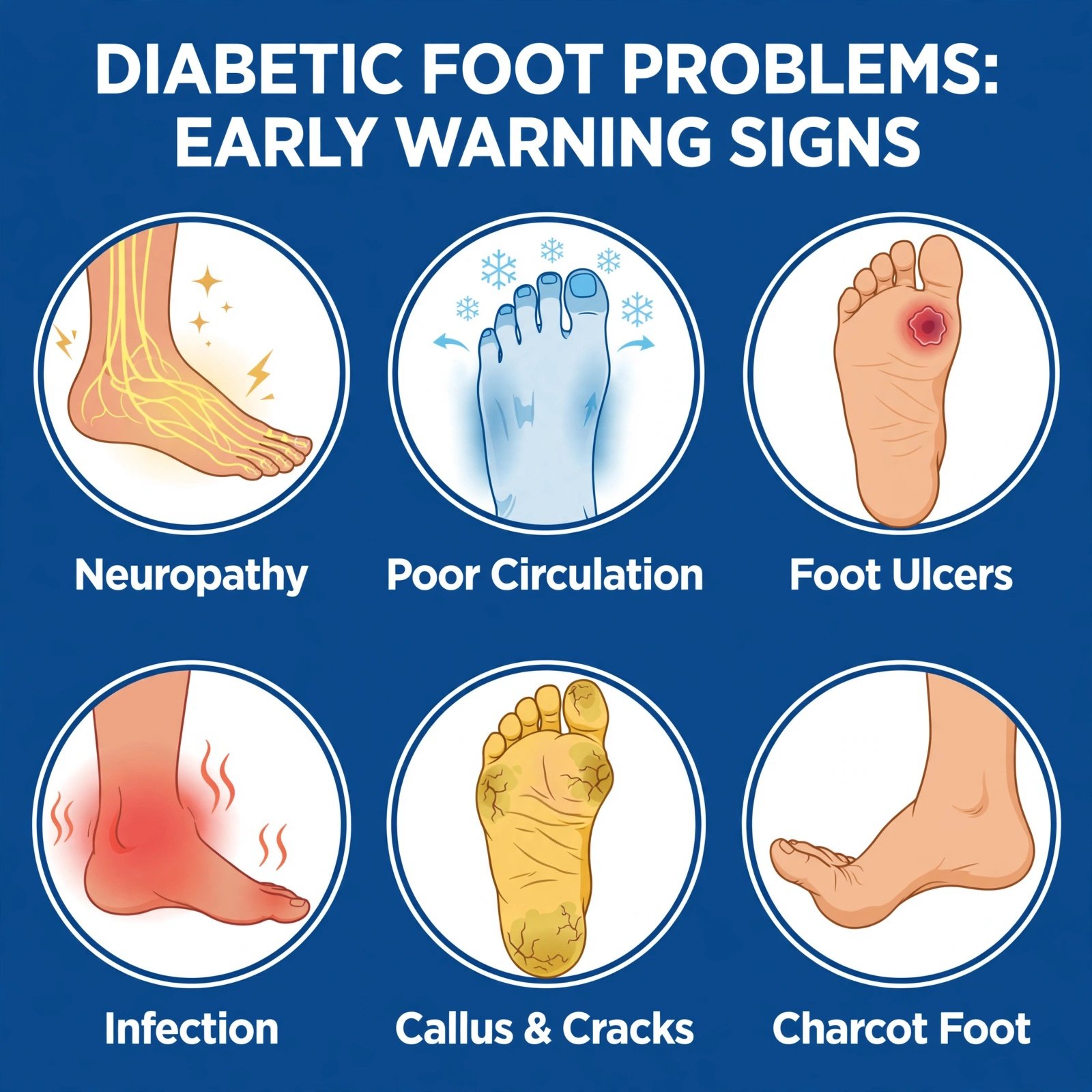
Some of the most common issues podiatrists see in patients with diabetes include:
Neuropathy – numbness, tingling, or a 'pins and needles' feeling, along with reduced ability to feel injury or temperature
Poor circulation – cold feet, slow-healing cuts, or changes in skin colour
Diabetic foot ulcers – open sores, often on pressure points like the ball of the foot or heel, that don't heal as they should
Infections – bacteria entering through small, unnoticed cuts or cracks in the skin
Calluses and cracked skin – areas of hard or dry skin that can crack and become an entry point for infection if not managed
Charcot foot – a rarer but more serious condition where nerve damage affects the bones and joints of the foot, changing its shape over time
3. Warning Signs That Need Immediate Attention
Certain changes shouldn't wait until your next scheduled check-up. If you notice any of the following, it's worth booking an appointment straight away:
A cut, blister, or sore that hasn't started healing within a few days
An area that's red, warm to the touch, or swollen
Changes in skin colour, particularly pale, blue, or dark patches
An unusual or unpleasant odour coming from the foot
Numbness or a loss of sensation you haven't noticed before
Increasing pain, throbbing, or discomfort in the foot or toes
4. How Professional Diabetic Foot Care Helps
Regular diabetic foot assessments are designed to catch problems before they become serious. During a check-up, a podiatrist will typically assess circulation, sensation, skin condition, nail health, and how well your current footwear supports your feet.
From there, you'll get a personalised care plan, which might include practical advice on daily foot care, specific footwear recommendations, or treatment for any issues found during the assessment. How often you should have these check-ups depends on your individual risk level, and your podiatrist can help you work out the right schedule for your situation.
5. Daily Foot Care Tips for Diabetics
Alongside regular professional check-ups, a few daily habits make a real difference:
Check your feet every day, including between the toes and the soles, using a mirror if it's hard to see underneath
Wash and dry your feet properly, and moisturise regularly, but avoid applying cream directly between the toes
Trim nails carefully and straight across, rather than rounding the corners, to help avoid ingrown nails
Wear well-fitting, supportive shoes, and avoid walking barefoot, even at home
Keep on top of your general diabetes management, as blood sugar levels have a direct effect on how well your feet heal
Avoid treating corns, calluses, or hard skin yourself with blades or over-the-counter acid-based treatments
6. Why Trust DG Podiatrist for Diabetic Foot Care
Diabetic foot care isn't somewhere to cut corners. At DG Podiatrist, diabetic assessments are carried out to international clinical standards by a UK-qualified podiatrist, with clinics fully certified by the relevant governing body. Whether you're based in Mayfair, London, or Harare, Zimbabwe, you'll receive the same thorough, personalised approach to managing your foot health alongside your diabetes.
7. Final Thoughts
Diabetic foot problems are far easier to manage when they're caught early, and that starts with knowing what to look out for and not putting off a check-up when something feels different. Regular professional care, combined with good daily habits, goes a long way toward protecting your mobility and comfort.
Frequently Asked Questions (FAQs)
Q1. How often should someone with diabetes see a podiatrist?
This depends on your individual risk level, including how well-controlled your diabetes is and whether you've had foot issues before. Your podiatrist will recommend a check-up schedule that's right for you.
Q2. Can diabetic foot damage be reversed?
Some effects, like nerve damage, can be difficult to reverse fully, but early detection and consistent care can prevent things from getting worse and help protect the foot's overall health.
Q3. Are diabetic foot checks painful?
No, a diabetic foot assessment is generally a straightforward, non-invasive appointment involving a visual and sensory check of your feet.
Q4. What is diabetic neuropathy and how does it feel?
Diabetic neuropathy refers to nerve damage caused by diabetes, which can lead to numbness, tingling, or a burning sensation in the feet, and a reduced ability to feel pain or temperature.
Q5. Can I treat a diabetic foot ulcer at home?
No, diabetic foot ulcers should always be assessed and managed by a healthcare professional, as they can worsen quickly and carry a higher risk of infection if left untreated.
Q6. What kind of shoes are best for diabetic feet?
Well-fitting, supportive shoes with enough room for your toes, minimal internal seams, and good cushioning are generally recommended. A podiatrist can advise on footwear suited to your specific foot shape.
Q7. Is it normal for diabetic feet to feel cold?
Cold feet can be linked to reduced circulation, which is common with diabetes, but it's worth having this checked by a podiatrist rather than assuming it's nothing.
Q8. Can diabetic foot problems be prevented?
Many diabetic foot complications can be significantly reduced through regular check-ups, good daily foot care, and well-managed blood sugar levels.
Q9. What's the difference between a diabetic foot check and a regular podiatry appointment?
A diabetic foot check specifically focuses on circulation, nerve sensation, and skin integrity to catch diabetes-related complications early, alongside general foot health.
Q10. Should I check my own feet if I have diabetes, even without symptoms?
Yes, daily self-checks are recommended even if you feel fine, since diabetic foot problems can develop without obvious pain due to reduced sensation.
Ready to put your best foot foward?
Visit our bookings page or simply click below to book an appointment with DG Podiatrist today. Alternatively email us at bookings@dgpodiatrist.com.